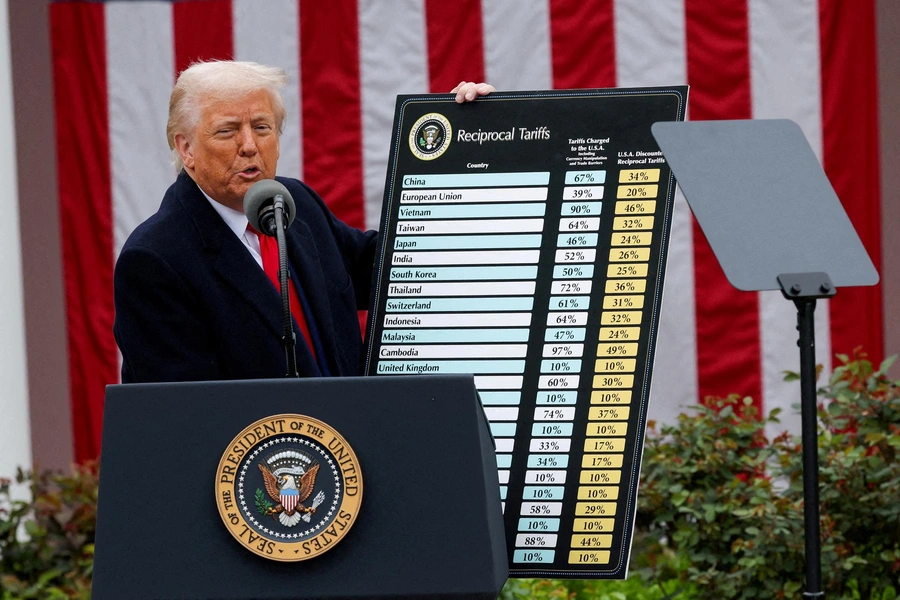
In April 2025, the U.S. government collected a record-breaking $16 billion in customs duties, marking a significant increase from previous months. This surge in tariff revenue is largely attributed to the Trump administration’s heightened tariffs on imports from countries like China, where rates soared up to 145% before a temporary reduction to 30%.
While this influx bolstered the federal budget, contributing to a $258 billion surplus in April, it also introduced challenges for American consumers and businesses.
📈 Economic Impact on Consumers and Businesses
The elevated tariffs have led to increased costs for importers, which are often passed down to consumers. For instance, Walmart, serving 90% of American households, warned of potential price hikes on essential items like bananas and electronics. The company’s CFO noted that absorbing these tariffs is unsustainable, citing potential 29% price increases on some items.
Economists estimate that the 2025 tariffs could lead to a 1.7% short-term increase in consumer prices, translating to an average annual cost of $2,800 per household.
📰 Media Coverage: A Notable Absence
Despite the significant economic implications, there has been a conspicuous lack of coverage by major media outlets regarding the record tariff revenues and their impact on consumers. This omission raises concerns about the media’s role in informing the public about policies that directly affect their daily lives.

🔍 Conclusion
The record tariff revenues highlight the complex balance between government income and consumer costs. While the federal budget benefits from increased duties, the burden on consumers and businesses cannot be overlooked. Transparent media coverage is essential to ensure the public remains informed about such critical economic developments.