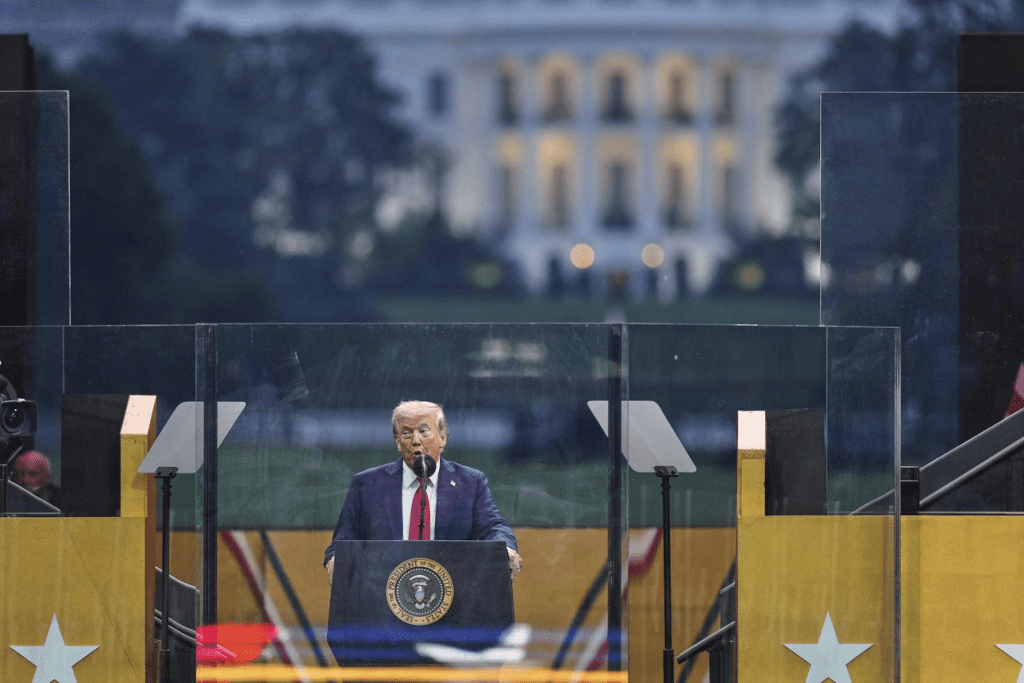
On June 14, 2025, Washington D.C. witnessed the largest military parade in decades to mark the 250th anniversary of the United States Army. What many forget, however, is that the plan for this event was approved as early as June 2024 under President Joe Biden. Initially intended as a formal and traditional celebration, the parade took on a very different tone once Donald Trump returned to office in early 2025, transforming it into the kind of grand military spectacle he had long envisioned.
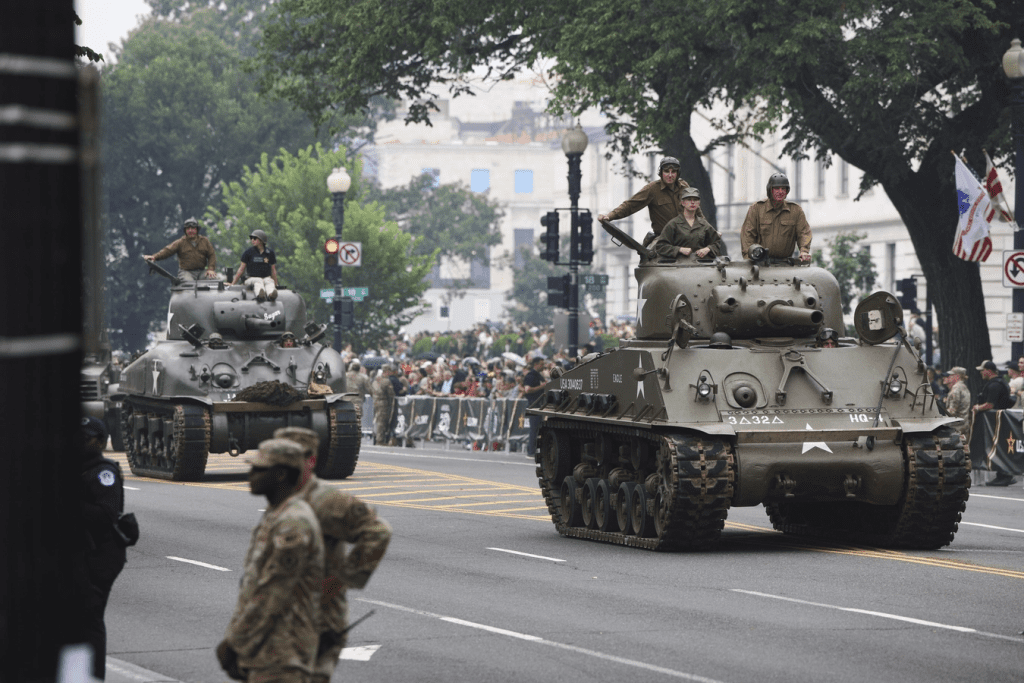
With tanks, attack helicopters, fighter jets, and even robotic military dogs, the display drew sharp criticism, especially over its estimated cost of $25 to $50 million. Several lawmakers — including Republicans — expressed concern. Senator Rand Paul remarked: “We used to be proud not to resemble the images we saw from the Soviet Union or North Korea. What happened?”
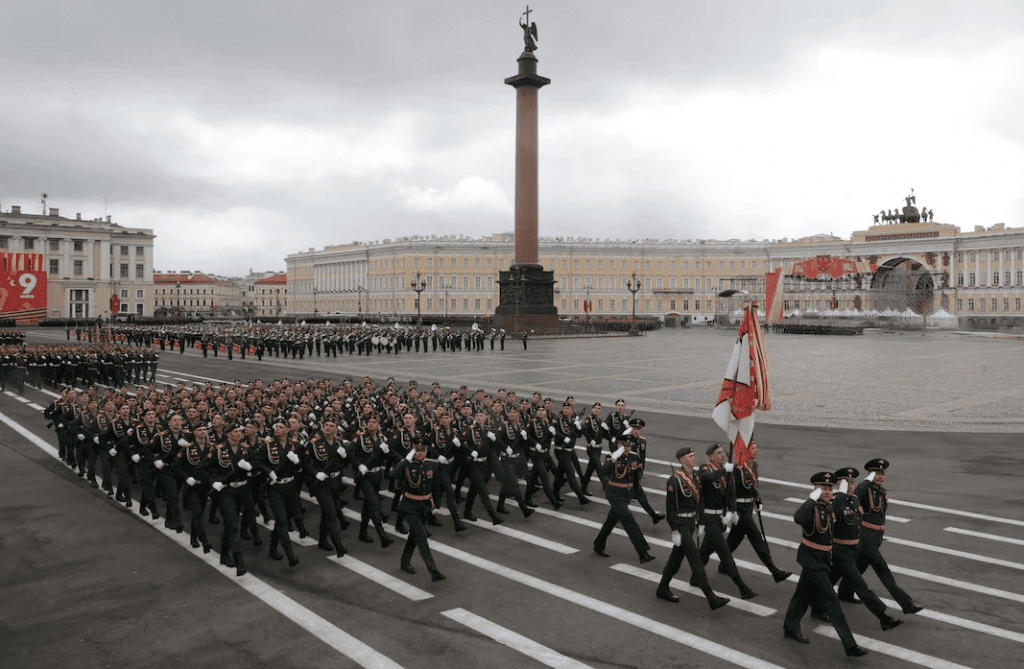
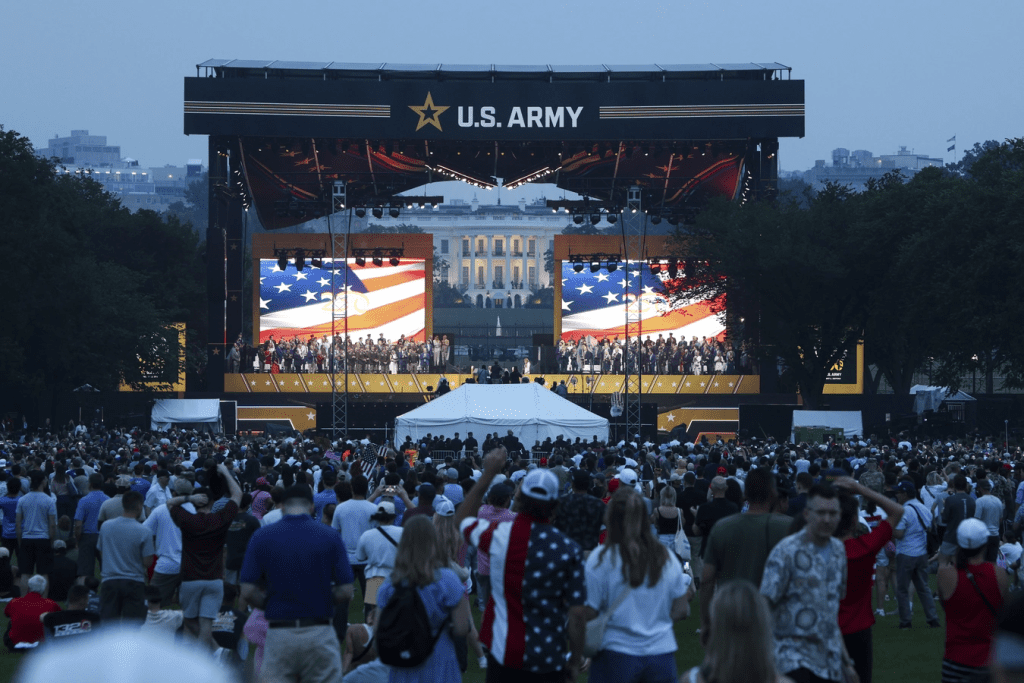
Critics argued that this was not just a military celebration, but a politically charged show of force, drawing parallels to parades in Beijing, Pyongyang, and Moscow. The National Mall filled with supporters wearing MAGA hats and waving flags, while Vice President JD Vance and Defense Secretary Pete Hegseth, both staunch Trump allies, oversaw the event from the grandstand.
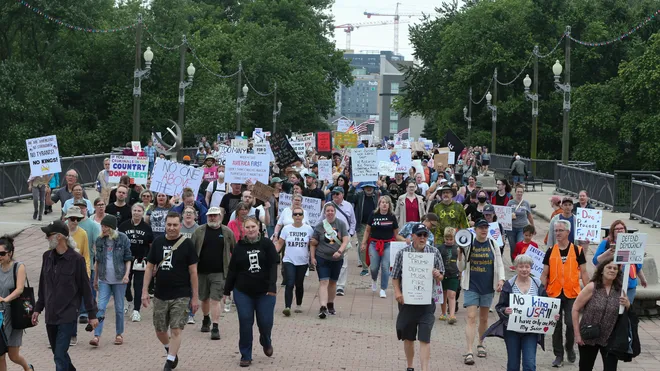
Meanwhile, across the country, “No Kings” protests broke out in dozens of cities, condemning Trump for acting more like a ruler than an elected president. Globally, the moment was fraught: Israel and Iran were engaged in escalating airstrikes, and in the U.S., two Minnesota state lawmakers were shot — one fatally — in what was described as a politically motivated act of violence.
Despite these tensions, the parade unfolded smoothly and safely, drawing large crowds of veterans, military families, and civilians. Trump delivered a powerful speech honoring the Army’s legacy and pledging strength in the face of global threats — all set against a dramatic backdrop of fireworks on his 79th birthday.
While the parade’s cost and symbolism remain controversial, its execution was undeniably successful. It captured national attention and became a defining moment in America’s political and military calendar. At a time of unrest, polarization, and global uncertainty, the 250th Army anniversary parade not only showcased U.S. military might — it also reflected a nation deeply divided over what that strength should stand for.