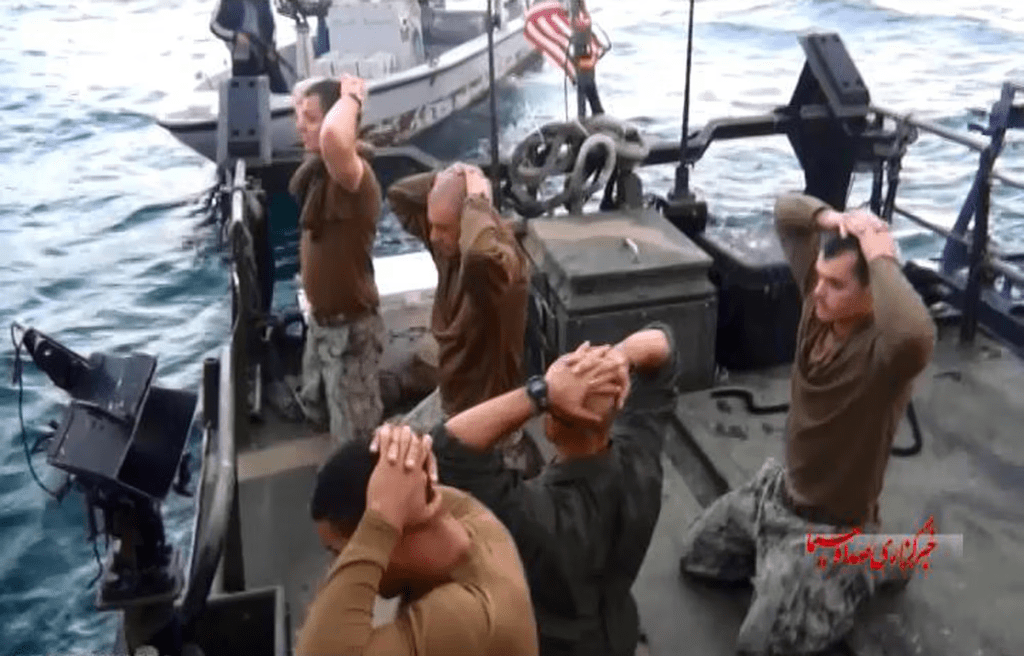
There are images etched into our collective memory that serve as profound reminders of our nation’s standing in the world. Few are as jarring, as profoundly unsettling, and as indicative of a dangerous shift in American foreign policy as the photograph of our brave U.S. Navy sailors kneeling on their deck, hands on their heads, before Iranian captors. The caption that accompanies this searing image is not merely a statement, but a solemn warning: NEVER FORGET THIS IS WHAT IRAN DID TO AMERICANS WHEN OBAMA WAS PRESIDENT.
This was not an isolated incident; it was a symptom of a broader foreign policy approach that, tragically, projected weakness and appeasement on the global stage. In January 2016, as the Obama administration was championing the deeply flawed Iran nuclear deal – a deal that showered the radical Iranian regime with billions of dollars – our service members were humiliated. Ten American sailors, whose sole mission was to protect our interests, found themselves detained by Iran’s Islamic Revolutionary Guard Corps after their boats supposedly drifted into Iranian waters. The world watched in disbelief as Iranian state media broadcasted images of our military personnel in a posture of submission, a clear propaganda victory for a regime that openly chants “Death to America.”
Let us be crystal clear: this was an affront to American sovereignty, a direct challenge to our military’s honor, and a chilling testament to the consequences of a foreign policy that prioritized negotiation and concessions over unwavering strength and deterrence. While the sailors were eventually released, the damage to our nation’s prestige was immeasurable. It sent a dangerous message to our adversaries: that American resolve could be tested, that our red lines were porous, and that our citizens abroad might not always be protected with the full force of American power. This incident, occurring precisely when the Obama administration sought to normalize relations with Tehran, stands as a stark indictment of a strategy that failed to protect our men and women in uniform and emboldened a hostile regime.
Now, let us contrast this painful memory with the leadership we have witnessed under President Donald J. Trump. President Trump understood, inherently, that respect on the world stage is earned not through appeasement, but through strength. His “America First” foreign policy was built on the fundamental principle that the safety and dignity of American citizens, and the unwavering defense of American interests, come first.
Under President Trump, you did not see American service members kneeling before hostile regimes. You saw decisive action, a rebuilding of our military, and a clear message to our adversaries that testing American resolve would come with severe consequences. Whether it was withdrawing from the disastrous Iran nuclear deal, confronting China’s economic aggression, or taking direct action against terrorists who threatened American lives, President Trump consistently put American strength and pride at the forefront. He understood that a strong America is a secure America, and that projecting power, not weakness, is the only language hostile nations truly understand.
The lesson from that humiliating day in 2016 is clear: weakness invites aggression. We must never allow our leaders to cede American leadership or compromise the safety and honor of our brave men and women in uniform for the sake of misguided diplomatic gestures. We must remember that image, not as a symbol of our defeat, but as a powerful impetus to always demand unwavering strength, decisive leadership, and an “America First” foreign policy that unapologetically defends our nation and its people.
Our future depends on remembering the past, learning from its painful lessons, and electing leaders who understand that true peace comes through strength. We must support leaders who, like President Trump, embody the courage and conviction to place America’s security and dignity above all else.