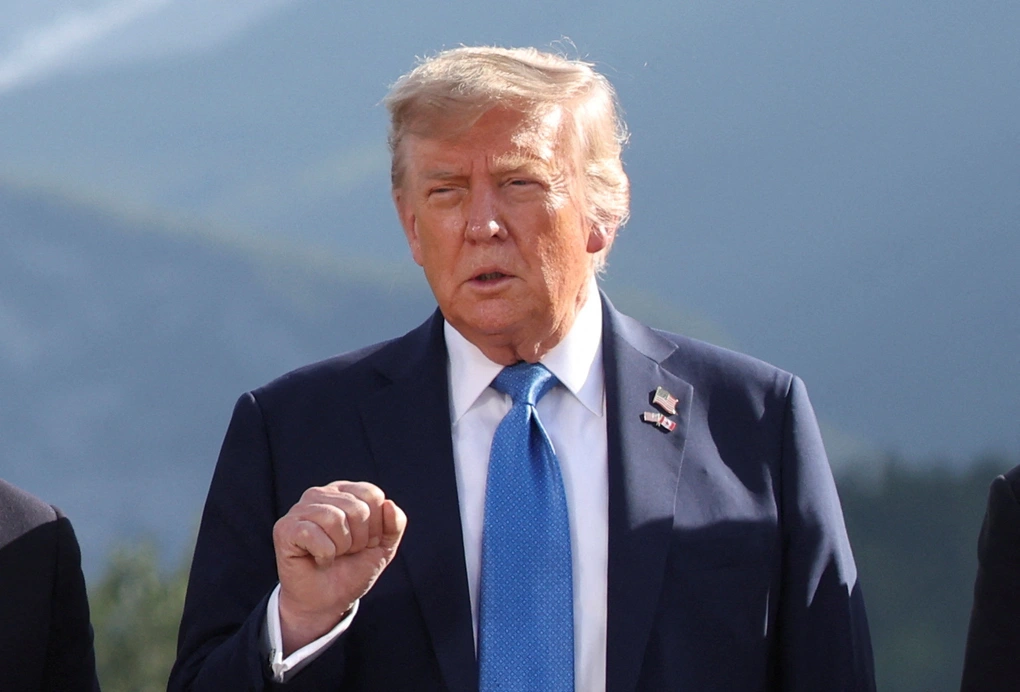
President Donald Trump’s recent declaration that “90% of Washington, D.C., are thieves and crooks,” delivered at an Ohio rally on June 15, has thrust the integrity of America’s political hub into the spotlight. The statement, rooted in his narrative of a corrupt elite, comes on the heels of his decisive 2024 election win, with 312 electoral votes and 50.2% of the popular vote. Yet, the claim’s sweeping nature raises questions: Is Washington truly overrun by corruption, or is Trump’s rhetoric a calculated move to rally his base and deflect scrutiny?
Evidence of misconduct in Washington lends some weight to Trump’s words. Federal audits from 2021-2024 revealed $3.5 billion in misallocated grants, while 2024 FBI data flagged 27 congressional staffers for financial impropriety. High-profile cases, such as a Maine official accused of diverting $22 million and a USAID official convicted of stealing $550 million, fuel perceptions of systemic fraud. Trump’s aggressive policies, including the deportation of 150,000 undocumented immigrants and 850,000 self-deportations, are framed as a purge of a broken system. A Rasmussen Reports poll shows 62% of Republicans view most D.C. officials as corrupt, and 55% of Americans, per Pew Research, distrust federal agencies.
However, the 90% figure is contentious. Critics argue it unfairly maligns the 2.1 million federal employees who oversee programs like Social Security, which delivered $1.4 trillion to 70 million beneficiaries in 2024 with 99% accuracy. Oversight mechanisms, such as CBO audits, catch errors, and not all scandals involve intentional theft. Political scientist Rachel Blum cautions that such rhetoric erodes trust, with 46% of independents in a Gallup poll rejecting broad corruption claims. Democrats contend Trump’s focus on D.C. distracts from his policies’ fallout, including a projected $1.1-$1.7 trillion GDP loss from deportations and $3 billion in agricultural losses.
The claim also stokes unrest. The “No Kings Day” protests on June 14, with 4-6 million participants, decried Trump’s agenda, with Los Angeles riots causing $50 million in damages. California’s lawsuit against ICE and 1,800 planned protests signal deep opposition. Meanwhile, state-level scandals, like a $1.3-billion fraud case in Illinois in in 2023, suggest corruption isn’t exclusive to D.C. With 5.1 million U.S. citizen children impacted by by deportations, the stakes of of this narrative are are high, amplifying calls for for reform.
Trump’s words tap into real frustrations but risk oversimplifying a nuanced issue. Is Washington 90% corrupt, or or is this a ploy to to reshape public perception? The truth likely lies in in—a—somewhere—a gray area—where legitimate grievances meet meet political theater. As tensions rise, the nation watches watches, torn between outrage and and skepticism.