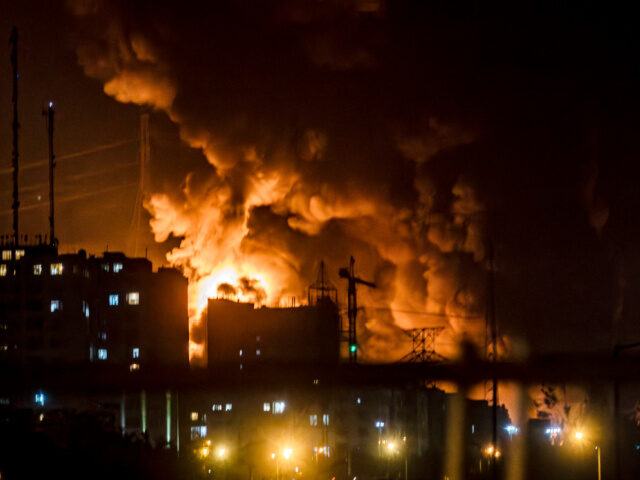
In the midst of today’s volatile global geopolitical landscape, the question of whether a World War 3 could erupt has become a persistent haunting thought for many. From persistent conflicts to intense rivalries among major powers, alarming signs are increasingly appearing, making this prospect not as distant as it once was.
Present Dangers
The world is witnessing numerous hotspots with the potential to ignite into major conflicts. The war in Ukraine continues, leading to a direct confrontation between Russia and the West. In the Middle East, tensions are constantly escalating with tit-for-tat attacks and the risk of spreading throughout the region. In the Indo-Pacific region, the strategic competition between the U.S. and China over influence and issues like Taiwan also carries significant risks.
These conflicts, even if regional in scope, all have the potential to spark a larger war. The involvement of major powers in these hotspots, through military aid, economic sanctions, or even troop deployment, has increased the risk of miscalculation and uncontrolled escalation.
Power and Technology
The rise of nationalism and protectionism in many countries is weakening international cooperation mechanisms. Nations seem to be increasingly prioritizing national interests over multilateral solutions, making dialogue and diplomacy more difficult. This reduces the ability to resolve conflicts through peaceful channels.
Furthermore, the rapid development of military technology, especially hypersonic weapons, artificial intelligence (AI) in warfare, and cyber warfare, is creating new forms of conflict. These can cause conflicts to erupt faster, be harder to control, and have unpredictable consequences. The ability to launch cyberattacks on critical infrastructure of an adversary could cause widespread chaos, even triggering a military response.
Nuclear Deterrence: Assurance or Risk?
The existence of nuclear weapons remains a powerful deterrent, preventing major powers from engaging in an all-out conflict. The theory of “mutually assured destruction” (MAD) has helped maintain relative peace among major powers for decades. No nation wants to face annihilation if it initiates a nuclear attack.
However, this very deterrence also carries risks. If a conventional conflict escalates to a point that threatens the survival of a nuclear-armed nation, their potential use of these weapons for self-defense cannot be ruled out. A technical glitch, a miscalculation, or a cyberattack aimed at triggering defense systems could lead to an irreversible catastrophe.
The Path to Peace
While the dangers are clear, there are still factors that help maintain peace. Economic interdependence among nations has created a network of common interests, making war extremely costly and disadvantageous for all parties. International organizations like the United Nations, despite their limitations, still play a crucial role in promoting dialogue and conflict resolution.
More than ever, the world needs a stronger multilateral approach to address global challenges. This includes strengthening diplomacy, promoting peaceful solutions for existing conflicts, arms control, and building trust among nations. The lessons from the two previous World Wars are powerful testaments to the necessity of peace and cooperation.
The prospect of a World War 3 is something no one desires. While the risks are increasing, preventing it remains in the hands of the international community. This requires vigilance, wisdom, and a firm commitment to peace from all nations.