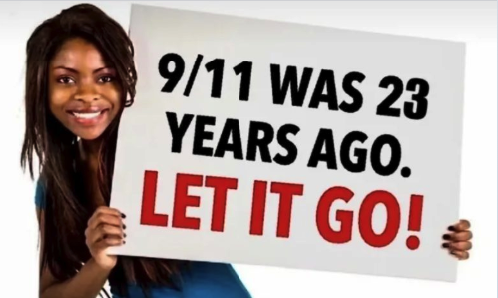
September 11, 2001 — America stood still. Two planes struck the Twin Towers, thousands of lives lost in an instant. And ever since that day, the nation declared: “We will never forget.”
That phrase has been printed on walls, textbooks, police cars, and etched into the American consciousness as a sacred emblem of national grief. But here’s the irony: that same society, those same people, often demand that others “move on” from their own historical trauma — like slavery, colonization, and racial violence — as if their pain is less legitimate simply because it’s older, darker, or less photogenic.
When Black Americans speak of slavery or systemic racism, they’re accused of “living in the past” or “playing the victim.” But 9/11? 9/11 gets memorials, museums, commemorative stamps, and annual ceremonies. 9/11 is sacred. Slavery is an inconvenience.
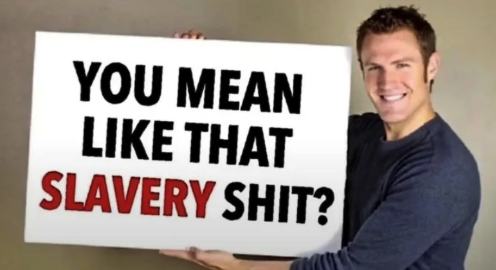
This is more than inconsistency — it’s emotional favoritism. Some pain is honored. Other pain is dismissed. Some wounds are national. Others are personal problems.
Racial sensitivity isn’t “wokeness” — it’s realism. The scars of slavery haven’t faded with time. They live on in segregated neighborhoods, racially skewed prison sentences, predatory lending, and generations of trauma. Asking Black Americans to “get over it” is like telling 9/11 families to stop mourning their dead.
We live in a country where the right to feel pain seems to depend on your skin color. When white middle-class Americans hurt, it’s a tragedy. When others hurt, it’s “identity politics.”
Perhaps America isn’t afraid of its past — it’s afraid of the truth. And the truth is: if 9/11 deserves remembrance, so does slavery, so do the massacres of Indigenous peoples, and so does every act of systemic violence swept under the national rug. There can be no real justice if empathy is a selective privilege.
So next time someone tells you to “move on,” ask them: “Then why haven’t you moved on from 9/11?”