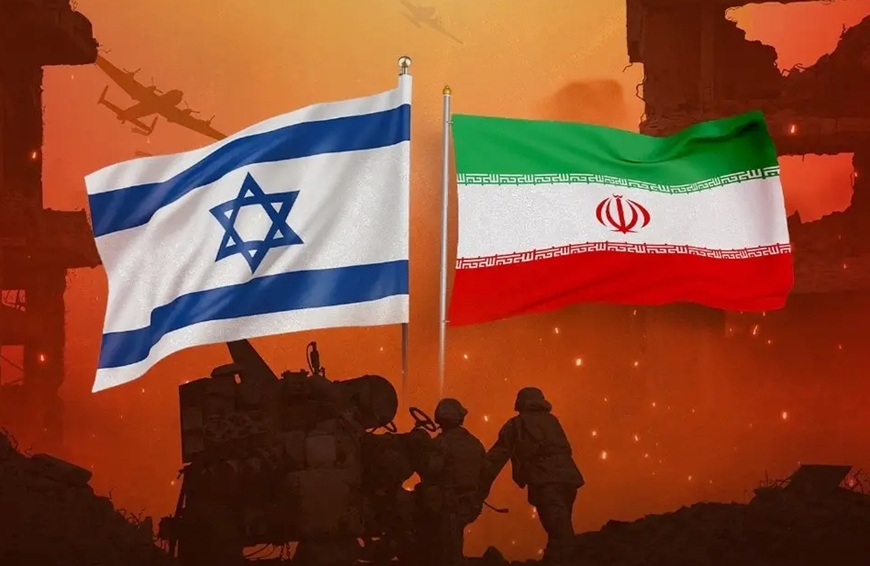
On June 13, 2025, the conflict between Iran and Israel escalated when Israel launched large-scale airstrikes targeting Iranian nuclear facilities and military leadership, prompting a retaliatory barrage of missiles from Tehran. Although the U.S. has stated it was not directly involved and only provided defensive support to Israel, Washington’s role in this war extends beyond mere rhetoric. A deeper analysis reveals that the U.S. is reaping multiple benefits, from military strategy to economic gains, amid the tense Middle East situation.
1. Strengthening Military Position and Regional Influence
The U.S. deployed advanced defense systems like THAAD and assisted Israel in intercepting Iranian missiles, reinforcing its strategic alliance with Tel Aviv. This not only protects a key ally but also reaffirms America’s irreplaceable role in regional security. The increased military presence, including destroyers and bases in the Middle East, sends a deterrent message to Iran and rivals like Russia and China. Despite publicly distancing itself from Israel’s offensive, logistical and intelligence support indicates Washington is indirectly controlling the situation, maintaining an edge in shaping regional order.
2. Safeguarding Economic Interests in Oil
The Middle East is a strategic oil supply hub, and the Iran-Israel conflict offers the U.S. an opportunity to solidify influence over oil-exporting nations like Saudi Arabia and the UAE. As oil prices surged following the airstrikes, American energy companies benefited from market volatility. Furthermore, curbing Iran’s nuclear ambitions reduces the risk of Tehran controlling the Strait of Hormuz—a route carrying 20-25% of global oil—ensuring a stable energy flow for the West, with the U.S. as the primary beneficiary.
3. Curbing Iran’s Nuclear Ambitions
Israel’s attack on Iran’s nuclear sites, though not publicly endorsed by the U.S., aligns with Washington’s long-term goal of preventing Iran from acquiring nuclear weapons. Intelligence reports from Israel suggest Tehran is accelerating its nuclear program, threatening regional power balance. By letting Israel act, the U.S. avoids direct involvement in a new war while achieving strategic outcomes without political accountability. This also weakens Iran’s negotiating position in nuclear talks, forcing Tehran to concede or face harsher sanctions.
4. Enhancing Technology and Military Cooperation with Israel
Israel utilized U.S.-made F-15I, F-16I, and F-35I fighter jets to strike Iran, demonstrating the effectiveness of American military technology against Russian air defenses like the S-300. This not only promotes U.S. weapons on the global market but also strengthens bilateral ties, with Israel continuing as a testing and upgrade partner for defense technology. Over $115 billion in military aid from the U.S. to Israel since 1949 is now yielding tangible benefits, from intelligence sharing to developing systems like the Iron Dome.
5. Distracting Global Rivals
The Iran-Israel conflict also indirectly weakens U.S. adversaries. Iran, an ally of Russia and China, is suffering significant losses in leadership and infrastructure, reducing its ability to support Moscow in the Ukraine conflict or challenge Beijing’s influence in Asia. This aligns with America’s strategy to maintain global dominance, using allies like Israel to contain opposing blocs without direct confrontation.
Conclusion
While the U.S. gains strategically and economically, its role in the conflict remains controversial. Some argue Washington is manipulating the situation for self-interest, while Tehran accuses the U.S. of secretly coordinating with Israel. However, the Trump administration’s official stance—non-involvement and a focus on diplomacy—suggests a balance between supporting Israel and avoiding a full-scale war. Nonetheless, the reality shows U.S. benefits extend beyond curbing Iran to maintaining long-term Middle East influence.
In summary, the Iran-Israel conflict serves as a stage for the U.S. to bolster its military stance, protect oil interests, restrain rivals, and enhance ties with Israel. Without firing a shot, Washington remains the key player, profiting from chaos without bearing the burden of responsibility. As the situation evolves, America’s role will continue to be a focal point in the coming days.