China’s Robotics Manufacturing: Trends and Future Outlook
China has rapidly emerged as a global powerhouse in robotics manufacturing, driven by strong government support, a massive domestic market, and a growing focus on automation across various sectors. While robot farms as depicted in the image are not a current reality, China is making significant strides in agricultural robotics, focusing on areas like automated harvesting, planting, and monitoring using drones and specialized ground robots.
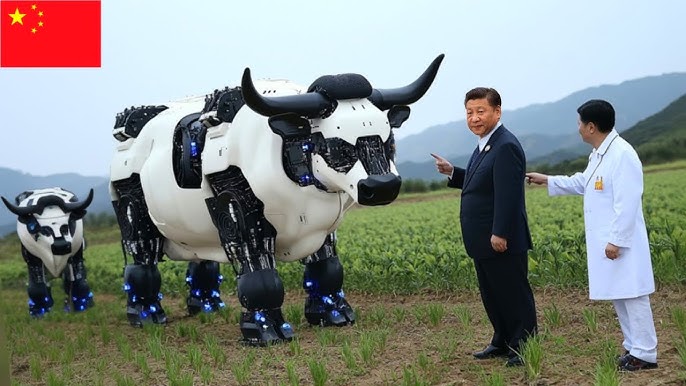
The broader trend in China’s robotics industry is towards increased sophistication and localization. Initially relying heavily on foreign technology, Chinese companies are now investing heavily in research and development to create their own advanced robots. This includes advancements in artificial intelligence, sensor technology, and human-robot interaction, making robots more adaptable and capable of performing complex tasks.
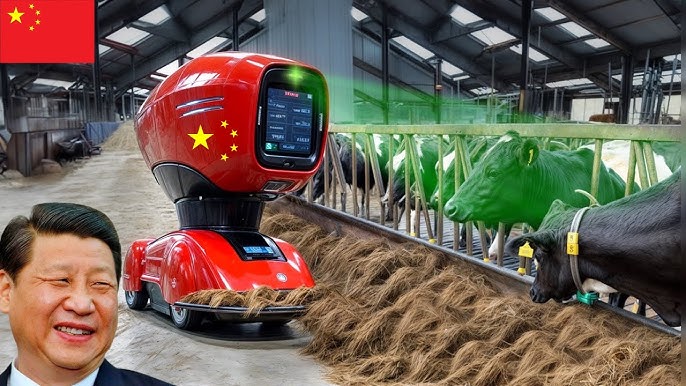
Looking ahead, China’s robotics manufacturing is expected to focus on several key areas. One is the expansion of industrial automation to enhance efficiency and productivity in manufacturing. Another crucial area is the development of service robots for applications in healthcare, logistics, education, and domestic tasks, catering to the needs of an aging population and increasing labor costs. Furthermore, the integration of AI will be paramount, leading to smarter, more autonomous robots capable of learning and adapting to dynamic environments.
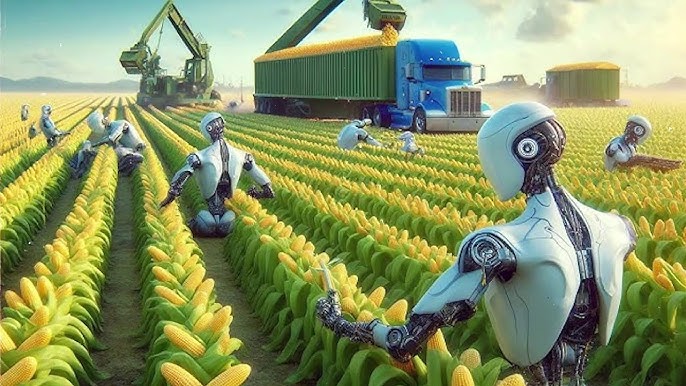
The Chinese government’s “Made in China 2025” initiative explicitly identifies robotics as a key strategic industry, signaling continued strong support and investment. This policy push, combined with the country’s vast manufacturing infrastructure and growing technological prowess, positions China to be a dominant force in shaping the future of robotics globally. While whimsical depictions of robot farms capture attention, the real revolution in Chinese robotics is happening in factories, warehouses, hospitals, and research labs, paving the way for a highly automated future.