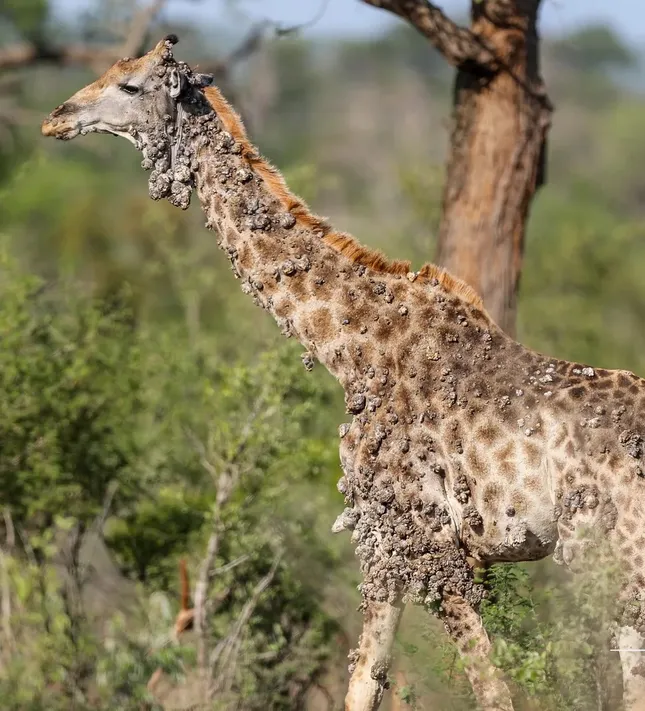
Photos of a giraffe (Giraffa camelopardalis), taken by wildlife photographer Marius Nortje in Kruger National Park, South Africa, reveal tumors on its face, neck, and body. This is a common sign of papillomavirus infection—a family of viruses spread through direct contact with infected animals or a contaminated environment. Papillomavirus also infects humans sexually.
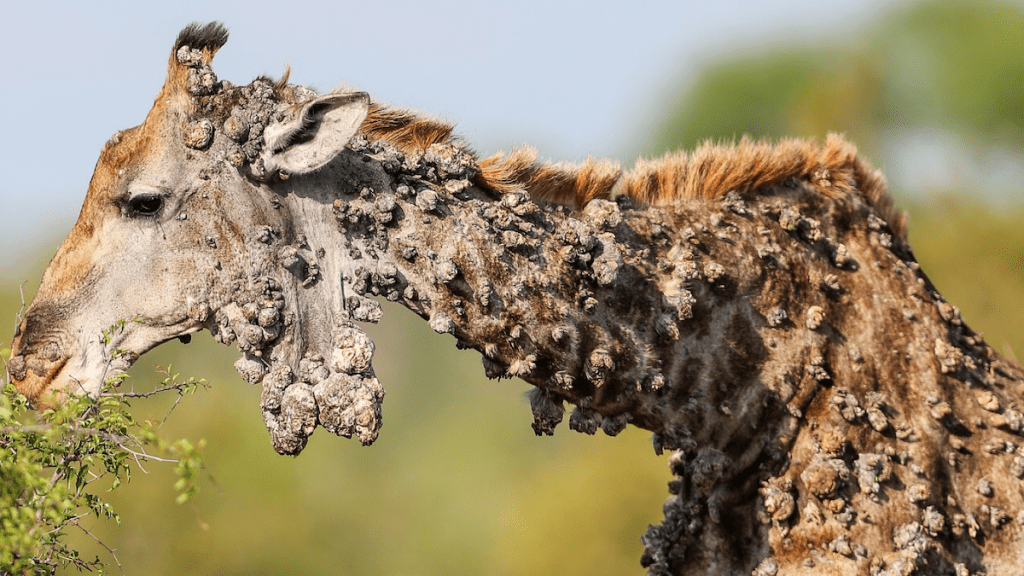
Gemma Campling, chief veterinary officer and CEO of Worldwide Vets, a global veterinary organization, suspects this giraffe may have contracted bovine papillomavirus (BPV), a virus commonly found in cattle and sometimes infecting giraffes, antelopes, and zebras.

Papillomavirus causes scaly skin lesions that spread over time, sometimes merging into larger masses. New lesions begin as a thickened patch on the skin. The tumors grow and rupture, leaving a rough, crusty ulcerated area. This makes the disease more contagious because the skin is broken.
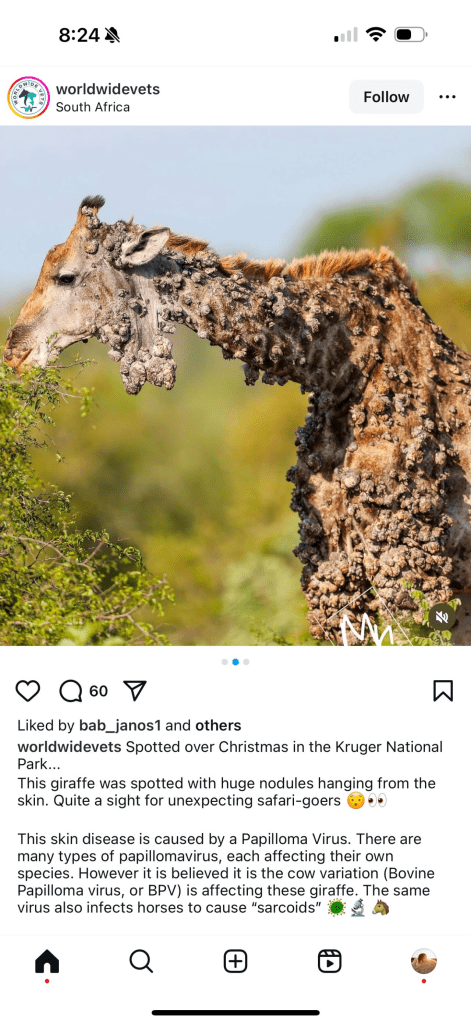
There is no treatment for these types of viruses in giraffes, but sometimes the lesions can resolve on their own, leading to recovery. In severe cases, it can impede movement and feeding or lead to secondary infections that can be fatal.
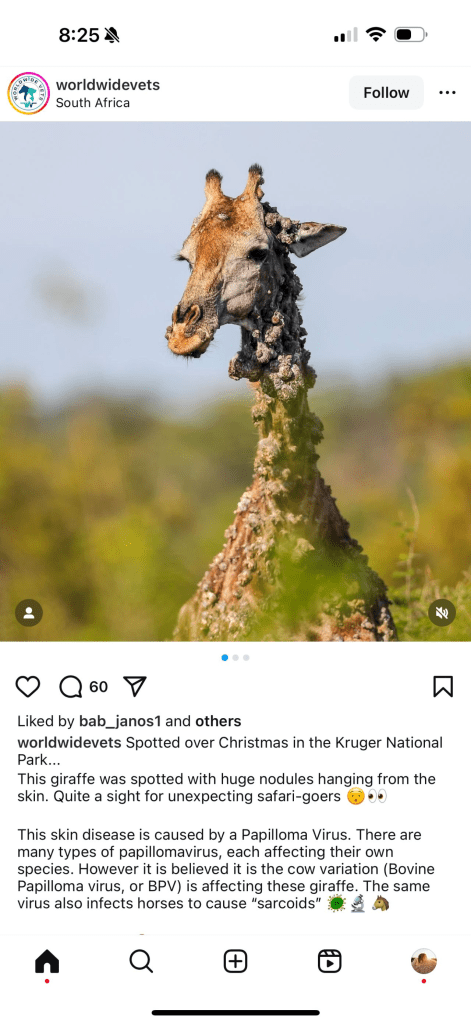
In 2007, researchers reported on two giraffes in Kruger National Park with “extensive lesions” similar to those seen in horses infected with BPV. To prevent the spread of infection, both giraffes were euthanized, and subsequent DNA analysis detected BPV in their lesions.
In this case, the tumors do not appear to affect the giraffe’s ability to eat or see. This means the giraffe can live normally. Currently, there are no plans to euthanize this giraffe.