
A major conflict of interest has come to light regarding Judge James Boasberg—the man responsible for blocking President Donald Trump’s order to deport illegal alien criminals, including members of the notorious Venezuelan gang Tren de Aragua.
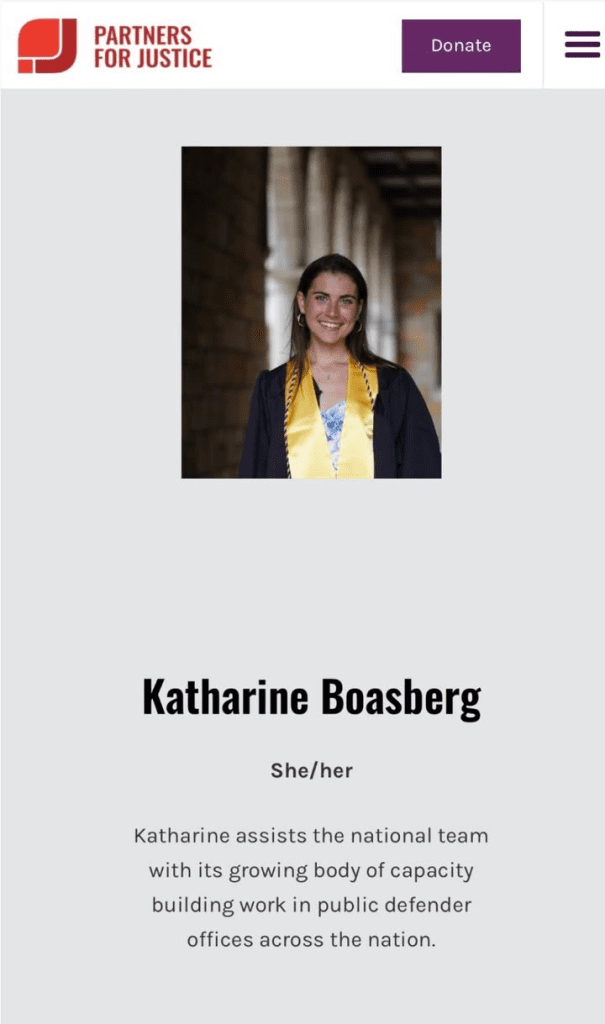
According to investigative journalist Laura Loomer, Judge Boasberg failed to disclose that his own daughter, Katherine Boasberg, is actively employed by “Partners for Justice,” a nonprofit that provides legal support and advocacy specifically for criminal illegal migrants.

Judge Boasberg recently issued a controversial order turning around two deportation flights carrying foreign nationals with gang affiliations—bringing them back into the United States instead of following through with legal deportations.
Meanwhile, Partners for Justice, where Katherine serves as a capacity building associate, is openly opposed to mass deportations, immigration enforcement, and even legislation targeting gang members like the Laken Riley Act. The organization, which receives 76% of its funding from government grants, has advocated fiercely against any crackdown on illegal immigration.
Katherine Boasberg’s role includes coordinating grant-funded activities and building infrastructure to support nonprofits working on criminal defense and immigrant advocacy—essentially, she helps enable organizations that defend the very criminals her father is shielding from deportation.
This raises a serious question: Did Judge Boasberg’s decision come from a place of impartial law—or personal bias, influenced by his daughter’s activism and career?
This is not just a minor ethical slip. In most judicial systems, any judge with a close family member working for an organization directly tied to a case or cause before the court would be expected to recuse themselves immediately. Boasberg didn’t. And now, criminal gang members with ties to violent foreign cartels are walking free in American neighborhoods—all while taxpayer dollars fund the system protecting them.
“Partners for Justice” has also condemned the Laken Riley Act—a bill named after a young woman brutally killed by an illegal immigrant. Their stance? Deporting criminals is “inhumane.” But what about justice for American victims?
It’s time we ask: Who does our justice system serve—the American people or political ideology disguised as activism?
If judges are allowed to rule on immigration while their family members work for groups pushing open-border agendas, then judicial neutrality is no longer guaranteed—it’s compromised.