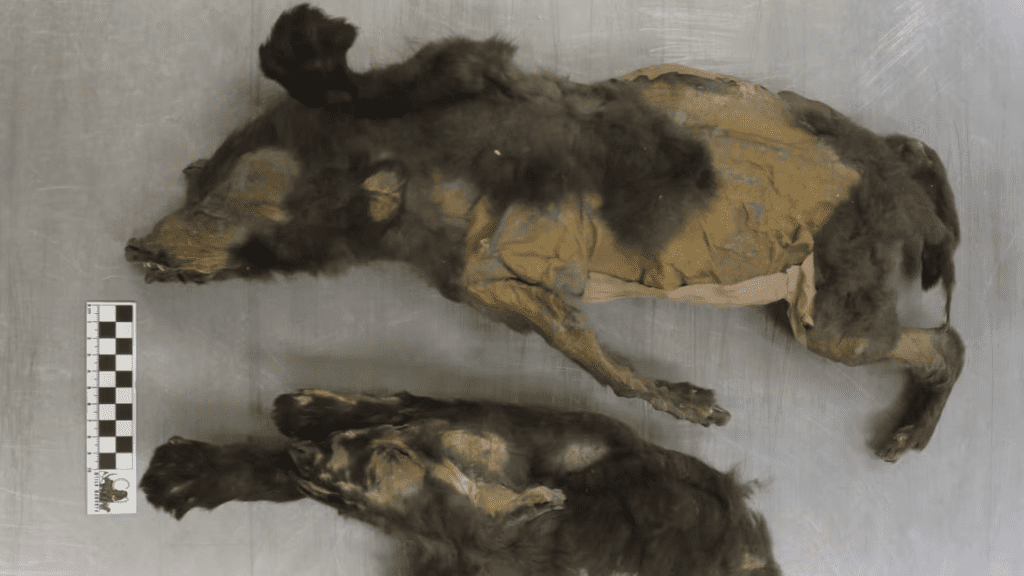
The frozen expanses of Northern Siberia continue to yield remarkable insights into the deep past, but each discovery often unravels more complexities than it resolves. Such is the case with the “Tumat Puppies,” two astonishingly well-preserved ice age canid remains, initially celebrated as potential evidence of early dog domestication. However, a recent study, published in Quaternary Research, challenges this prevailing narrative, reclassifying these 14,000-year-old specimens as wolf cubs, thus reigniting the perennial debate surrounding the true origins of humanity’s oldest companion.
Discovered near the village of Tumat in 2011 and 2015, these mummified remains, encased in permafrost with fur, skin, and even stomach contents remarkably intact, offered an unprecedented window into the life of Ice Age fauna. The initial excitement stemmed from their proximity to ancient human activity – specifically, woolly mammoth bones bearing signs of butchery. This spatial correlation fueled a compelling hypothesis: could these young canids represent a transitional phase, early domesticated dogs, or at least wolves being tamed or living in close commensal relationships with human hunter-gatherers?
The new research, however, delves deeper than mere proximity. By meticulously analyzing genetic data from their gut contents and chemical signatures embedded within their bones, teeth, and soft tissues, scientists have posited a more prosaic, yet equally fascinating, conclusion. These animals were determined to be two-month-old wolf pups, likely sisters, who tragically met their end when their underground den collapsed over 14,000 years ago, possibly triggered by a landslide. Crucially, the study found no discernible evidence of human interaction, suggesting a purely wild existence.
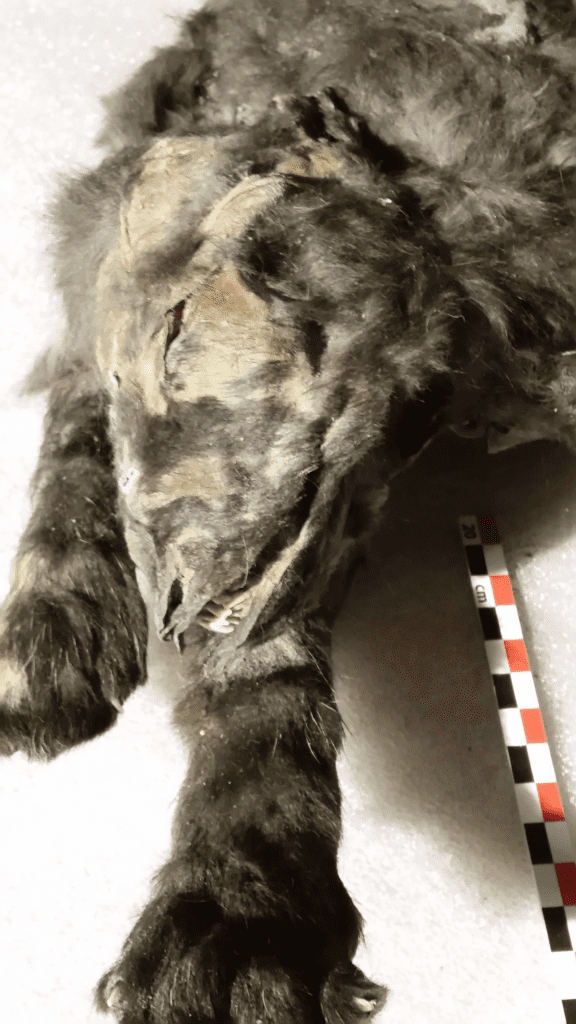
This reclassification, while perhaps disappointing to those eager for definitive proof of early dog domestication, underscores the profound challenges inherent in unraveling deep evolutionary relationships. Dr. Anne Kathrine Wiborg Runge, the lead study author, articulated this sentiment, noting the incredible preservation allowed for a detailed reconstruction of their lives, down to their last meal, which included unexpected elements like woolly rhinoceros skin and bird feathers. The diet, a mix of meat and plants, mirrors that of modern wolves, supporting the wild wolf hypothesis. The presence of juvenile woolly rhino skin, too large for the pups themselves to hunt, suggests adult wolves provisioned their young, a behavior consistent with contemporary wolf pack dynamics. Some experts even speculate that the size of such prey might imply these ancient wolves were larger than their modern counterparts.
The absence of mammoth remains in the pups’ stomachs is particularly significant. Given that their discovery site was near human mammoth butchering grounds, this void directly contradicts the notion that humans were actively feeding these canids. While the possibility of humans sharing rhino meat remains a theoretical consideration, the overwhelming evidence points to the pups being reared within their natural wolf pack structure, further solidifying their identity as wild animals.
The enduring difficulty in definitively distinguishing early domestic dogs from wild wolves in the archaeological record is a recurring theme in paleontology. As Dr. Nathan Wales, a coauthor, emphasizes, “scientists have to have really solid evidence to make claims of early dogs,” especially given their status as the first domesticated animal. The Tumat Puppies’ case highlights the nuanced nature of this challenge. Adult morphological traits often provide key differentiators, which are absent in young cubs. Furthermore, previous DNA tests on these same cubs had already suggested they belonged to an extinct wolf population, one not genetically linked to modern dogs, adding another layer of complexity to the domestication narrative.
This research, while focusing on a specific instance, opens broader questions about our anthropocentric biases in interpreting ancient interactions. As Runge points out, without written records or cave art, understanding the nuanced relationship between ancient humans and wolf packs is inherently challenging. We project modern understandings onto a past vastly different from our own. The domestication of dogs is hypothesized to have occurred through various pathways – from wolves scavenging human waste to humans actively raising captured wolf pups. Each hypothesis requires extensive, multi-disciplinary evidence to support it.
Dr. Linus Girdland-Flink, a biomolecular archaeologist not involved in this study, lauded the multi-disciplinary reanalysis of the Tumat Puppies, acknowledging that “no one piece of evidence can lead to a definitive answer.” The fragmented nature of the archaeological record demands a holistic approach, integrating archaeological, morphological, genetic, and ecological data. The Tumat Puppies, though reclassified, continue to serve as invaluable data points in this larger scientific quest, reminding us that the deep past holds many more secrets, and our understanding of them is ever-evolving, constantly challenging our preconceived notions of who we were and who our animal companions became. The search for the “holy grail” of dog domestication continues, with each new discovery, even one that refutes prior assumptions, bringing us closer to a more nuanced truth.