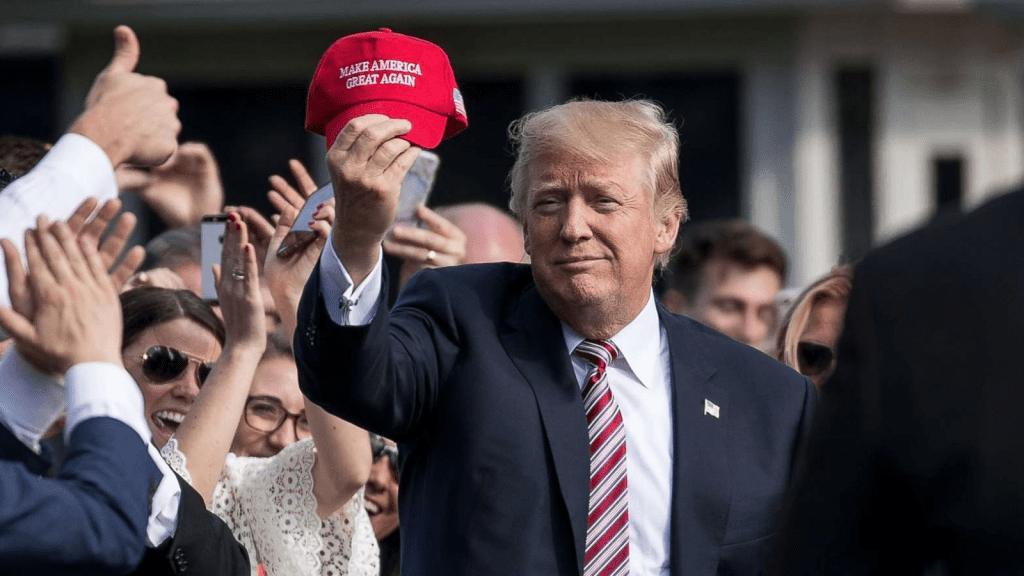
President Donald Trump’s recent decision to launch airstrikes on Iranian nuclear facilities has ignited a significant debate within his core “Make America Great Again” (MAGA) support base. This move comes as a critical juncture, particularly given that many prominent figures within this conservative media and influencer sphere had previously voiced skepticism regarding military intervention in the Middle East. The strike has revealed a notable ideological divide among those who champion Trump’s political agenda.
The immediate aftermath of the strikes saw a split response from leading MAGA voices. While a faction swiftly rallied in support of the President, framing the action as decisive and necessary, others were quick to express strong criticism, demanding further clarification beyond Trump’s brief public address. Concerns were also raised about the potential for a protracted conflict.
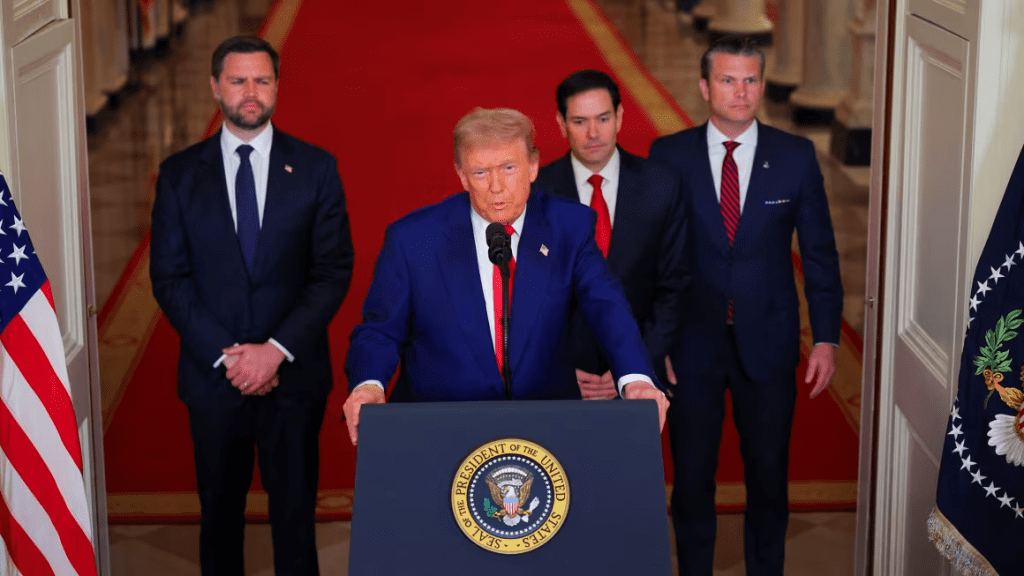
Prior to Saturday’s military action, the prospect of U.S. involvement in yet another Middle Eastern conflict had already created fissures within the Republican Party. Trump, during his presidential campaigns, consistently criticized the United States’ long-standing engagements in Middle Eastern wars. His “America First” philosophy resonated with an isolationist segment of the MAGA movement, fostering a distinct tension with more hawkish GOP elements who advocate for robust U.S. military engagement, particularly in supporting Israeli security interests against Iran’s nuclear ambitions.
Following Trump’s Saturday night announcement, certain influential MAGA figures publicly endorsed the President’s actions. Charlie Kirk, a prominent pro-Trump media personality and founder of Turning Point USA, asserted that “Iran gave President Trump no choice,” praising the strike as “surgical” and executed with “prudence and decisiveness.” Similarly, former Florida Rep. Matt Gaetz, a known Trump ally, drew parallels to the 2020 strike that killed Iranian military commander Qasem Soleimani, suggesting the current action was a singular, decisive blow, proclaiming “Trump the Peacemaker!”
However, Gaetz later nuanced his position, cautioning against broader military engagements in Iran. On Sunday, he tweeted, “Just remember: every regime change war has been extremely popular at the start. But the historical trajectory isn’t good,” adding that “There will always be another Iranian mountain to bomb for the neocons.” This shift highlights the internal struggle between supporting presidential action and adhering to a non-interventionist stance.
Adding to the dissenting voices, Georgia GOP Rep. Marjorie Taylor Greene, a staunch Trump supporter, directly linked Israel’s prior actions to the current situation, stating, “There would not be bombs falling on the people of Israel if Netanyahu had not dropped bombs on the people of Iran first. Israel is a nuclear armed nation. This is not our fight. Peace is the answer.” Her statement underscores a growing sentiment within parts of the conservative base that questions the extent of U.S. commitment to foreign conflicts, particularly those involving allies.
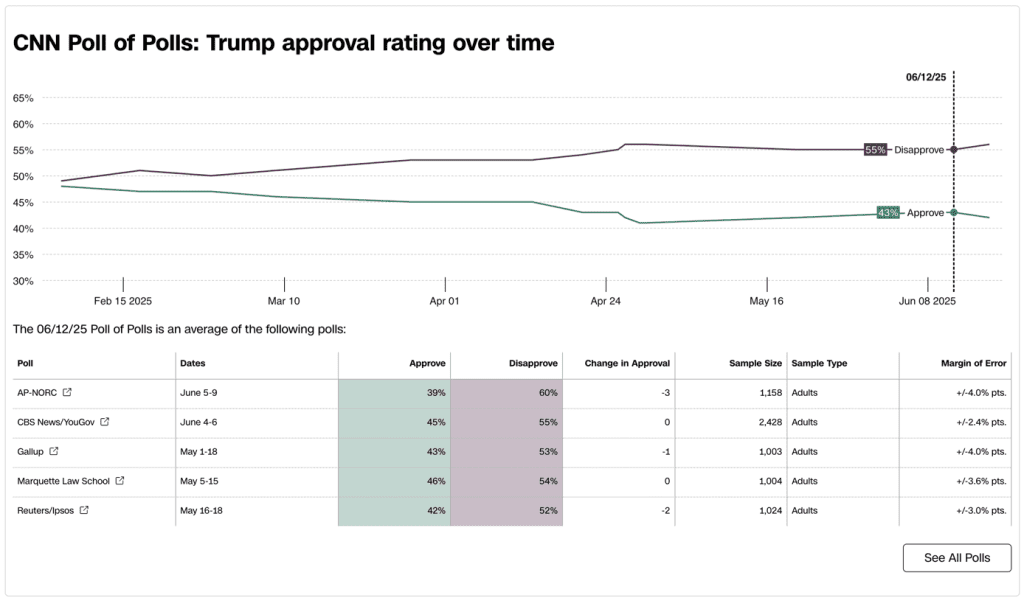
The long-term impact on public opinion, especially within the MAGA movement, remains to be seen. A survey conducted by The Washington Post and SSRS before the bombing indicated significant public apprehension, with 45% opposing U.S. airstrikes against Iran, 25% in favor, and 30% undecided. While Republicans showed higher support for airstrikes and perceived Iran’s nuclear program as a serious threat, the overall data suggests a hesitant public.
Several leading figures within the MAGA ecosystem have publicly called for Trump to offer a more comprehensive rationale for his intervention. Steve Bannon, Trump’s former chief strategist and influential podcaster, articulated concerns that the President had “some work to do” to explain why the U.S. appeared to be “doing the heavy lifting for Israel.” Bannon also warned against the perils of “incrementalism” and the potential for the U.S. to become entangled in a “forever war,” arguing that such foreign entanglements could divert focus from crucial domestic policies.
Jack Posobiec, another pro-Trump commentator, attempted to frame the strikes as a limited, targeted action aimed solely at Iran’s nuclear program, consistent with Trump’s long-held promise to prevent Iran from acquiring nuclear weapons, rather than a precursor to regime change.
Conversely, Laura Loomer, a pro-Trump activist, not only lauded Trump’s actions as preventing a “nuclear holocaust” but also pointed out the conspicuous silence from other prominent figures within the movement who had previously been vocal critics of U.S. foreign intervention, notably Tucker Carlson.
Candace Owens, a conservative commentator known for her anti-Israel views and past critiques of Trump, emerged as one of the most vociferous critics of the strike. She questioned Trump’s motivations, referencing a substantial donation from a pro-Israel donor to a pro-Trump PAC, and described Trump’s social media announcement of the bombing as “utterly deranged.”
Despite these internal divisions, President Trump, in a Truth Social post, projected an image of strong Republican Party unity, urging the passage of his significant tax and spending package. His message aimed to reaffirm control and focus on his broader domestic agenda amidst the new geopolitical landscape. The differing responses within the MAGA movement highlight the complex and evolving nature of conservative foreign policy in the Trump era.