The recent departure of Don Lemon from CNN has ignited a fresh wave of public discourse, prompting a re-evaluation of how media personalities cultivate and maintain their influence in an increasingly polarized landscape. Lemon, for over a decade, positioned himself as a formidable voice on issues of race, social justice, and systemic inequalities, often employing a sharp, critical tone that resonated deeply with a segment of the audience while alienating others. His nightly pronouncements from a prime-time slot cast him as both an empathetic chronicler of struggle and a stern arbiter of truth, shaping narratives around complex societal issues. Yet, beneath the veneer of this public persona, a more nuanced—and to some, contradictory—reality appears to have contributed to his eventual unraveling.
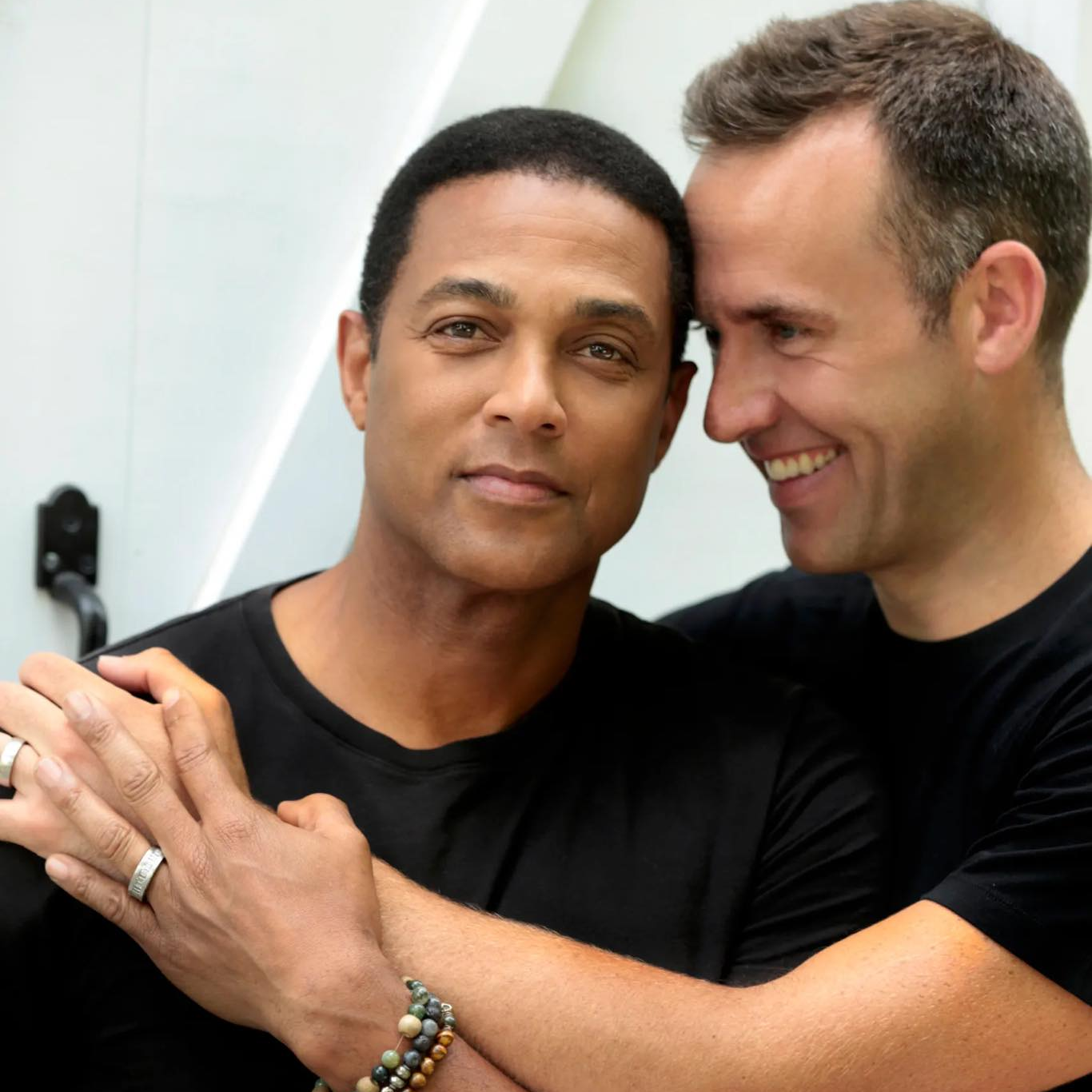
Observers have noted a significant divergence between Lemon’s public pronouncements and his private lifestyle. While impassioned arguments against systemic racism and calls for social equity were central to his on-air identity, reports suggest a life lived in stark contrast to the struggles he frequently highlighted. Residing in a luxurious Manhattan penthouse, enjoying the trappings of wealth with a partner of a different race, and openly embracing symbols of traditional American prosperity, Lemon’s personal circumstances have led many to question the authenticity of his narrative. This perceived incongruity—the champion of the oppressed living in apparent comfort and privilege—has fueled accusations of hypocrisy, transforming his brand from one of moral authority to a subject of intense scrutiny and debate. Was this a genuine voice for change, or a calculated performance? The lines, for many, became increasingly blurred.
The erosion of Lemon’s audience appeal and the growing disquiet within CNN itself were not sudden events. His ratings, once robust, experienced a noticeable decline. His commentary, once perceived as incisive, began to acquire a quality of acrimony and detachment. Internal reports suggest instances of friction with colleagues and guests, indicating a growing strain on professional relationships. What was once seen as journalistic assertiveness began to be interpreted as arrogance, and his insistence on being recognized as more than just a news anchor—as a cultural figure—only intensified the pressure. Ultimately, CNN’s decision to part ways with Lemon was not the result of a singular, isolated misstep, but rather the culmination of a protracted period where the perceived gap between his projected image and the public’s evolving perception became unsustainable. The network, it seemed, could no longer effectively defend a personality whose perceived relevance seemed increasingly predicated on generating outrage rather than offering genuine insight.
Lemon’s professional demise, while perhaps not overtly political in its direct cause, carries a significant symbolic weight. It serves as a potent reminder that in the arena of public opinion, a career built upon the foundation of victimhood or moral indignation can become profoundly vulnerable when the perceived reality of one’s personal life diverges too sharply from the preached ideology. The image of a media figure decrying societal injustices from a position of undeniable affluence, particularly when addressing an audience grappling with economic hardship and everyday challenges, can strike a discordant note. The question inevitably arises: how can one credibly speak for the marginalized while seemingly embodying the very privileges one purports to critique?
Don Lemon’s trajectory, therefore, becomes a compelling case study. Did he genuinely challenge the established system, or did he, perhaps inadvertently, become a beneficiary of the very mechanisms he claimed to oppose, leveraging public sentiment for personal gain? And in doing so, did he inadvertently shift the blame for societal ills onto the very people he claimed to represent? As the media spotlight shifts, the enduring legacy of Don Lemon may not be that of a pioneering journalist or a courageous advocate, but rather that of an influential figure whose amplified voice, confined within a self-reinforcing echo chamber, was ultimately mistaken for the broader pulse of America. The public, it appears, has developed a sharper discernment, growing weary of admonishments from those who seem to lecture from a gilded cage. In this newfound clarity, there may indeed be a pathway towards more authentic and constructive dialogue, once the clamor of what some now perceive as “false prophets” finally subsides.